Top 10 High-Value Transferrable Skills Employers Want from Graduates
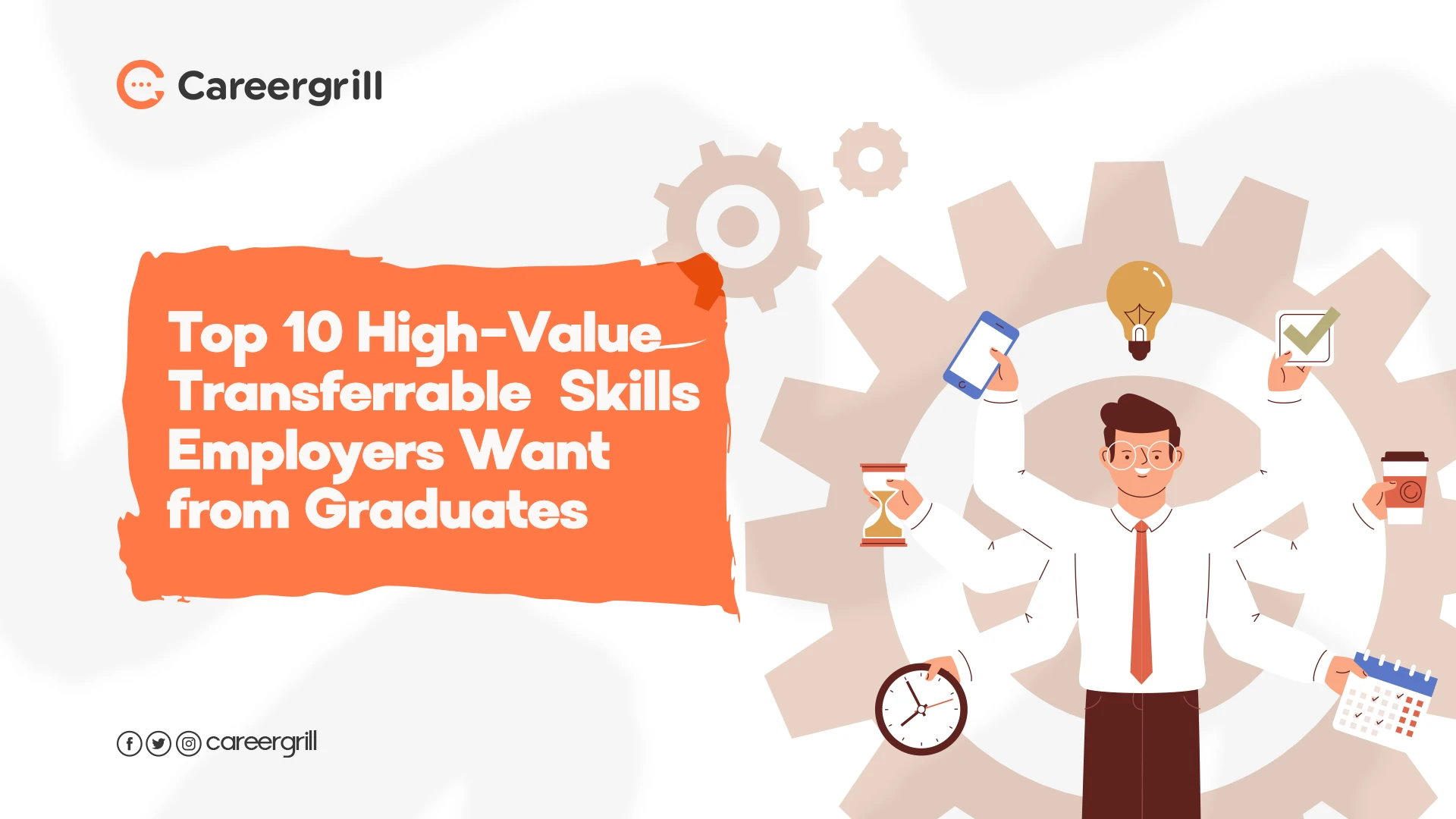
Graduating from the university is a thrilling milestone, but stepping into the job market can be overwhelming. As a recent graduate, you might wonder what exactly employers are looking for beyond your degree. The answer lies in high-value transferrable skills. Those versatile abilities that make you adaptable, resilient, and ready to tackle any job role.
A survey found that employers prioritise skills like communication, problem-solving, and teamwork over technical know-how. These skills are your golden ticket, applicable across all industries, from tech startups to multinational corporations.
So, what are these prized skills? And how can you develop them to stand out from the crowd?
1. Adaptability and Resilience
Employers are on the lookout for graduates who can thrive amidst change, whether it’s adapting to new technologies, shifting market trends, or evolving team structures. This means being open to learning new skills, adjusting workflows, and maintaining productivity even when faced with unexpected challenges.
Those who can pivot quickly and efficiently are often the ones who lead innovation and drive progress within their organizations. Being adaptable shows that you can handle the pressure of tight deadlines, manage multiple tasks simultaneously, and transition smoothly between projects. This level of flexibility makes you a crucial asset in any professional setting.
Resilience, on the other hand, is about bouncing back from setbacks and staying motivated. It’s a combination of mental toughness and a positive attitude. Employers value resilient employees because they can navigate the highs and lows of the workplace without losing steam. To build resilience, practice stress management techniques, seek feedback for continuous improvement, and view challenges as opportunities for growth. This mindset will not only help you fit into new work environments effortlessly but also keep you moving forward, no matter the circumstances.
2. Communication Skills
Effective communication is the cornerstone of any successful career, making it a top priority for employers. Whether it's verbal or written, the ability to convey ideas clearly and concisely is crucial. Good communicators can express their thoughts without misunderstandings, ensuring that everyone is on the same page, which is vital in both team settings and client interactions.
Verbal communication skills involve more than just speaking eloquently; they include active listening and engaging in meaningful conversations. This means paying attention to others, asking insightful questions, and providing constructive feedback. On the other hand, strong written communication is about crafting emails, reports, and presentations that are clear, persuasive, and free of errors. These skills help you articulate your ideas effectively, making you a valuable team member and a trusted point of contact.
Non-verbal cues such as body language, eye contact, and even tone of voice play a significant role in how your messages are received. Mastering these aspects of communication can enhance your interactions, build stronger relationships, and foster a collaborative work environment. Employers seek graduates who excel in communication because they are better equipped to lead teams, manage projects, and build rapport with clients and colleagues.
3. Critical Thinking and Problem-Solving
Critical thinking and problem-solving are invaluable skills that employers crave in graduates. These abilities involve analyzing situations, identifying problems, and developing innovative solutions. In a world where challenges are constant, the ability to approach issues systematically and make well-reasoned decisions is a game-changer.
Critical thinkers don't just accept information at face value. They delve deeper, questioning assumptions and exploring various angles before arriving at a conclusion. This analytical approach helps in uncovering root causes of problems and crafting strategies that are both effective and sustainable. Employers appreciate this skill because it leads to smarter, more strategic business decisions that drive success.
Problem-solving, on the other hand, is about applying your critical thinking skills to real-world scenarios. It's the capacity to brainstorm creative solutions, implement them effectively, and evaluate their success. Whether it's troubleshooting a technical issue, optimizing a workflow, or developing a new product, your ability to solve problems demonstrates your resourcefulness and initiative. These skills improve your individual performance and contribute to your team's and organization's overall success.
4. Teamwork and Collaboration
The ability to work well with others is essential in any professional setting. Employers are looking for team players who can contribute positively to group goals and foster a sense of camaraderie. Effective teamwork means understanding your role within the group, communicating openly, and supporting your colleagues to achieve shared objectives.
Collaboration extends beyond just working in the same physical or virtual space. It involves leveraging the diverse skills and perspectives of your team members to enhance creativity and problem-solving. By actively participating in discussions, offering constructive feedback, and being receptive to others' ideas, you contribute to a more dynamic and innovative team environment. Employers value this collaborative spirit because it leads to better outcomes and a more cohesive work culture.
Moreover, being adept at both in-person and virtual collaboration is crucial in today's hybrid work environments. Whether you're brainstorming in a conference room or coordinating projects via digital platforms, your ability to navigate different modes of teamwork is a testament to your versatility and adaptability. This makes you a valuable asset in any organization, as you can seamlessly integrate into various team dynamics and contribute to collective success.
5. Digital Literacy and Tech Savviness
In the digital age, proficiency with technology is no longer optional—it's essential. Employers seek graduates who are not only comfortable using digital tools but also adept at leveraging them to enhance productivity and innovation. This includes everything from basic software proficiency to understanding advanced concepts like data analytics, artificial intelligence, and automation.
Digital literacy means being able to navigate various software programs, apps, and platforms that are commonly used in business environments. Whether it’s mastering spreadsheet software, creating engaging presentations, or utilizing project management tools, your ability to handle these technologies efficiently can set you apart from other candidates. Employers appreciate tech-savvy individuals because they can streamline workflows, improve communication, and drive efficiency within the organization.
Staying updated with emerging technologies and trends is equally important. When you continuously learn and adapt to new tools and systems, you demonstrate a forward-thinking mindset and a willingness to evolve with the industry. This proactive approach not only enhances your skill set but also positions you as a valuable asset capable of contributing to the organization’s growth and staying ahead of the competition.
6. Leadership and Management
Leadership and management skills go beyond simply overseeing a team. They encompass the ability to inspire, motivate, and guide others towards achieving shared goals. Employers highly value graduates who can take initiative, drive projects forward, and foster a positive work environment. Effective leaders adapt to changing circumstances and empower their teams to perform at their best.
Being a good leader involves clear communication, strategic thinking, and empathy. It's about setting a vision and motivating your team to work towards it, while also being open to feedback and new ideas. Leadership also means making tough decisions and taking responsibility for the outcomes. These skills are crucial in helping organizations get through challenges and seize opportunities.
Moreover, management skills include organizing resources, managing time efficiently, and ensuring that projects are completed on schedule. Good managers can delegate tasks effectively, monitor progress, and provide support where needed. With leadership and management abilities, you show employers that you can handle responsibility, influence others positively, and contribute to the long-term success of the organization.
7. Emotional Intelligence (EQ)
Emotional Intelligence, or EQ, is a critical skill that enables individuals to navigate interpersonal relationships effectively. It encompasses self-awareness, empathy, and social skills, allowing you to understand and manage your own emotions while also recognizing and influencing the emotions of others. Graduates with high EQ are adept at building strong, collaborative relationships, which are essential in any professional environment.
Self-awareness is the foundation of emotional intelligence. It involves recognizing your emotional triggers and understanding how your emotions affect your behavior and decision-making. By being self-aware, you can manage your reactions in stressful situations and maintain a calm, composed demeanor, which is highly valued by employers.
Empathy and social skills are equally important aspects of EQ. Empathy allows you to understand and relate to the feelings and perspectives of your colleagues, fostering a supportive and inclusive work environment. Strong social skills enable you to communicate effectively, resolve conflicts, and build rapport with clients and team members. High EQ enhances teamwork, leadership, and overall workplace harmony, making you an indispensable asset to any organization.
8. Time Management
Efficient time management is a crucial skill that employers highly value. It involves organizing your workload, prioritizing tasks, and meeting deadlines consistently. Graduates who excel in time management can juggle multiple responsibilities without compromising on the quality of their work, making them highly reliable team members.
Prioritization is a key component of time management. It means identifying which tasks are most important and tackling them first. Tools such as to-do lists, calendars, and project management software can help you keep track of deadlines and ensure that you're focusing on high-priority tasks. This level of organization not only helps in meeting deadlines but also in reducing stress and preventing burnout.
Also, effective time management includes maintaining a healthy work-life balance. Graduates who can allocate their time wisely between work and personal life are more productive and motivated. Employers appreciate this because it leads to sustained performance and overall well-being. By demonstrating strong time management skills, you show employers that you are capable of handling responsibilities efficiently and contributing to the organization’s success.
9. Creativity and Innovation
Creativity and innovation are highly sought-after skills in today's competitive job market. Employers look for graduates who can think outside the box and bring fresh ideas to the table. Creativity involves generating unique solutions to problems, while innovation is about implementing these ideas to drive growth and improve processes.
Being creative means not being afraid to take risks and experiment with new approaches. It’s about viewing challenges from different perspectives and coming up with novel solutions. This kind of thinking can lead to breakthroughs in product development, marketing strategies, and operational efficiency. Employers value creativity because it can set their company apart from competitors and drive long-term success.
Innovation goes hand in hand with creativity. It involves turning creative ideas into actionable plans that produce tangible results. This might mean developing a new product, improving a service, or finding more efficient ways to complete tasks. Your ability to innovate shows employers that you can contribute to the company’s evolution and help it stay ahead of industry trends.
10. Interpersonal Skills
Interpersonal skills, often referred to as people skills, are vital for building positive relationships and effective collaboration in the workplace. These skills include empathy, communication, conflict resolution, and the ability to build rapport with colleagues, clients, and stakeholders. Employers value graduates who can navigate social interactions smoothly and contribute to a harmonious work environment.
Empathy is the cornerstone of strong interpersonal skills. It involves understanding and considering the emotions and perspectives of others, which helps in building trust and cooperation. Effective communication, both verbal and non-verbal, further enhances these interactions by ensuring that messages are conveyed clearly and respectfully. Being a good listener is equally important, as it fosters mutual understanding and respect.
Conflict resolution is another critical aspect of interpersonal skills. The ability to address and resolve disagreements constructively can prevent minor issues from escalating and maintain a positive workplace atmosphere. Building rapport with others, whether through informal conversations or professional interactions, helps to create a network of support and collaboration. By showcasing strong interpersonal skills, you demonstrate to employers that you can work well in team settings, manage client relationships, and contribute positively to the organizational culture.
Conclusion
In today's competitive job market, possessing a robust set of high-value transferrable skills is essential for recent graduates. These skills—adaptability and resilience, communication, critical thinking, teamwork, digital literacy, leadership, emotional intelligence, time management, creativity, and interpersonal abilities—are what employers are looking for to drive their organizations forward. By developing and showcasing these skills, you can set yourself apart and make a significant impact in any professional setting.
Remember, the journey to honing these skills is ongoing. Continuously seek opportunities for growth, whether through professional development courses, practical experiences, or feedback from peers and mentors. As you build and refine these abilities, you'll not only enhance your career prospects but also contribute to your personal and professional fulfillment.
For more resources and tips on developing these skills, explore the other articles and guides available on our website.
Ready to Take the Next Step?
Explore our services to accelerate your journey.